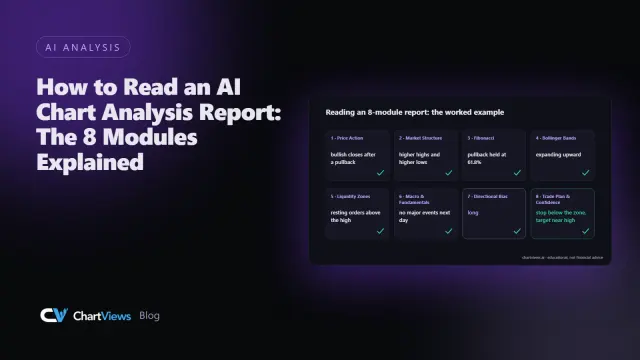
Trading Copilot Review: Is It Worth Using?

A chart can move from clean setup to missed opportunity in minutes. That is why a useful trading copilot review should focus on one question: does the tool help you make a more disciplined decision before the market moves? AI can speed up chart review, flag levels worth watching, and reduce the blank-screen problem. It cannot remove market risk or replace a trading plan.
For active traders, the value of a copilot is not a stream of generic trade calls. It is faster, more structured context. When a tool can identify trend direction, support and resistance, momentum, and potential invalidation levels from a chart, it gives you a repeatable starting point for deciding whether a setup deserves attention.
What a Trading Copilot Should Actually Do
The term "trading copilot" gets used loosely. Some tools produce market commentary from news and data. Others scan watchlists for technical conditions. Chart-focused copilots work from the visual information traders already use: price action, indicators, trendlines, volume, and key levels.
The strongest use case is not handing control to an algorithm. It is compressing the first stage of analysis. Instead of staring at ten charts and manually drawing every zone, you can use AI to generate a structured read: the dominant trend, nearby support and resistance, possible entries, target areas, and the price level that would challenge the thesis.
That matters most when your process is already defined. A day trader may use the analysis to prioritize which opening-range setup to monitor. A swing trader may use it to confirm whether a pullback is happening into meaningful support. A crypto trader watching a volatile market may use it to separate a genuine breakout from price pressing into a major resistance area.
The output is only useful if it is specific. “Bullish momentum” is not enough. A practical copilot should explain where the relevant level sits, what price behavior supports the view, and what would invalidate it.
Trading Copilot Review: Where AI Adds Value
Speed is the clearest advantage. Manual technical analysis is not difficult because every individual task is complicated. It is difficult because traders repeat those tasks across many symbols, timeframes, and market sessions. That repetition creates fatigue, and fatigue creates inconsistency.
An AI chart analysis tool can provide a second set of eyes in seconds. Upload a chart, receive an organized interpretation, then compare it with your own read. This is particularly valuable for traders who know the basics but hesitate when they need to turn a chart observation into a clear plan.
A good workflow looks like this: you start with the market and timeframe that fit your strategy, review the AI-generated trend and levels, then decide whether the setup meets your rules. You still control position size, risk per trade, time horizon, and whether to take the trade at all.
Consistency is the second advantage. Traders often become more selective after a winning streak and less selective after a losing one. A standardized chart review does not solve emotional decision-making on its own, but it can reduce the room for vague reasoning. If every trade must have a defined entry area, stop level, target, and invalidation point, weak setups become easier to reject.
Accessibility also matters. Technical analysis has a learning curve, especially around identifying meaningful support and resistance. AI can make chart language more approachable by translating a visual setup into a structured explanation. Beginners get a clearer framework. Experienced traders save time and gain confirmation without giving up control.
The Limits That Matter More Than the Marketing
No trading copilot knows what happens next. Price can break a well-defined support level after unexpected economic data. A clean technical setup can fail because liquidity dries up, a market opens with a gap, or a large player changes the order flow. AI analysis should be treated as probability-based decision support, never certainty.
Context remains essential. A chart image may not show the full picture: earnings risk, macroeconomic events, unusual volatility, news catalysts, correlations, or the market regime across higher timeframes. If you trade stocks, an otherwise attractive chart can be a poor choice minutes before an earnings report. If you trade forex, a key central-bank announcement can dominate technical levels.
There is also a quality issue. The AI can only analyze what you provide. A cluttered screenshot, unclear timeframe, missing price scale, or poorly configured indicator can lead to a less useful interpretation. Clear charts produce clearer analysis. That is not a minor detail. It is part of the process.
Finally, watch for false precision. A tool may identify an entry or target zone, but no platform can guarantee that a price will respect it. Treat levels as areas of interest, not promises. Your stop should be based on the point where your trade thesis is wrong, paired with a position size that keeps the loss acceptable.
Who Benefits Most From an AI Chart Copilot?
The best fit is an active trader who wants to review more charts without lowering standards. If you already use charts to make decisions but spend too long defining levels or second-guessing trend direction, a copilot can make the process faster and more repeatable.
It is also useful for newer traders who are learning how to convert technical concepts into a trade plan. Seeing structured analysis repeatedly can reinforce the relationship between trend, location, confirmation, risk, and reward. The key is to use the explanation as a learning tool, not a shortcut around learning.
The fit is weaker for anyone seeking hands-off profits. If your goal is to receive a signal, place an order, and ignore the trade, an AI copilot will likely create unrealistic expectations. Markets do not reward passive reliance on forecasts. They reward risk management, preparation, and the ability to adapt when the original setup changes.
How to Evaluate a Trading Copilot Before You Rely on It
Start with the output, not the feature list. Run the same chart through your own process and compare the tool's trend assessment, key levels, and invalidation logic with what you see. You are looking for clarity and relevance, not perfect agreement on every line.
Then test it across the conditions you actually trade. A tool may look impressive on a clean trending chart but provide less value in a range-bound, low-volume, or headline-driven market. Use examples from your watchlist, including setups that failed. The goal is to understand when the tool helps and when you need to lean more heavily on your own judgment.
Ask whether the analysis is actionable. Can you identify a likely entry zone, a logical stop area, and a target or next resistance level? Does the explanation distinguish between a breakout, a pullback, and a reversal attempt? If the result is broad commentary without a clear framework, it may not improve your execution.
Also consider friction. The best tool is one you will use consistently during a real trading session. A fast chart-upload workflow can be more valuable than a feature-heavy platform that requires constant setup. ChartViews AI, for example, is built around turning an uploaded chart into immediate technical insight, helping traders review trend, support, resistance, and possible trade levels without adding another complex screen to their process.
A Smarter Way to Use AI Analysis in Your Routine
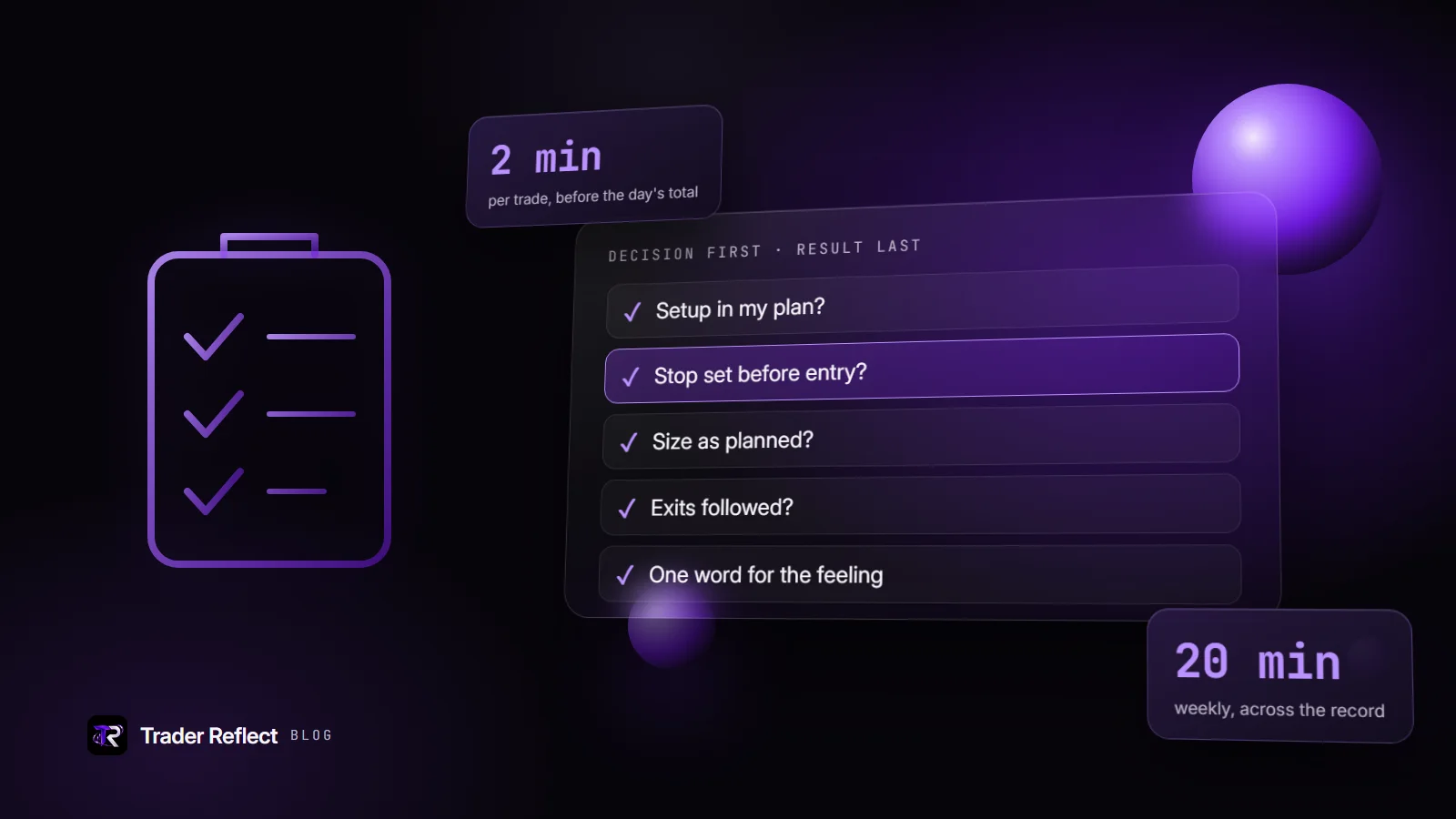
Treat the copilot as a pre-trade filter. Before entering, compare its view with your own checklist. Is the market trend aligned with the trade? Is price at a meaningful level? Is there enough room to the next resistance or support? Does the potential reward justify the defined risk?
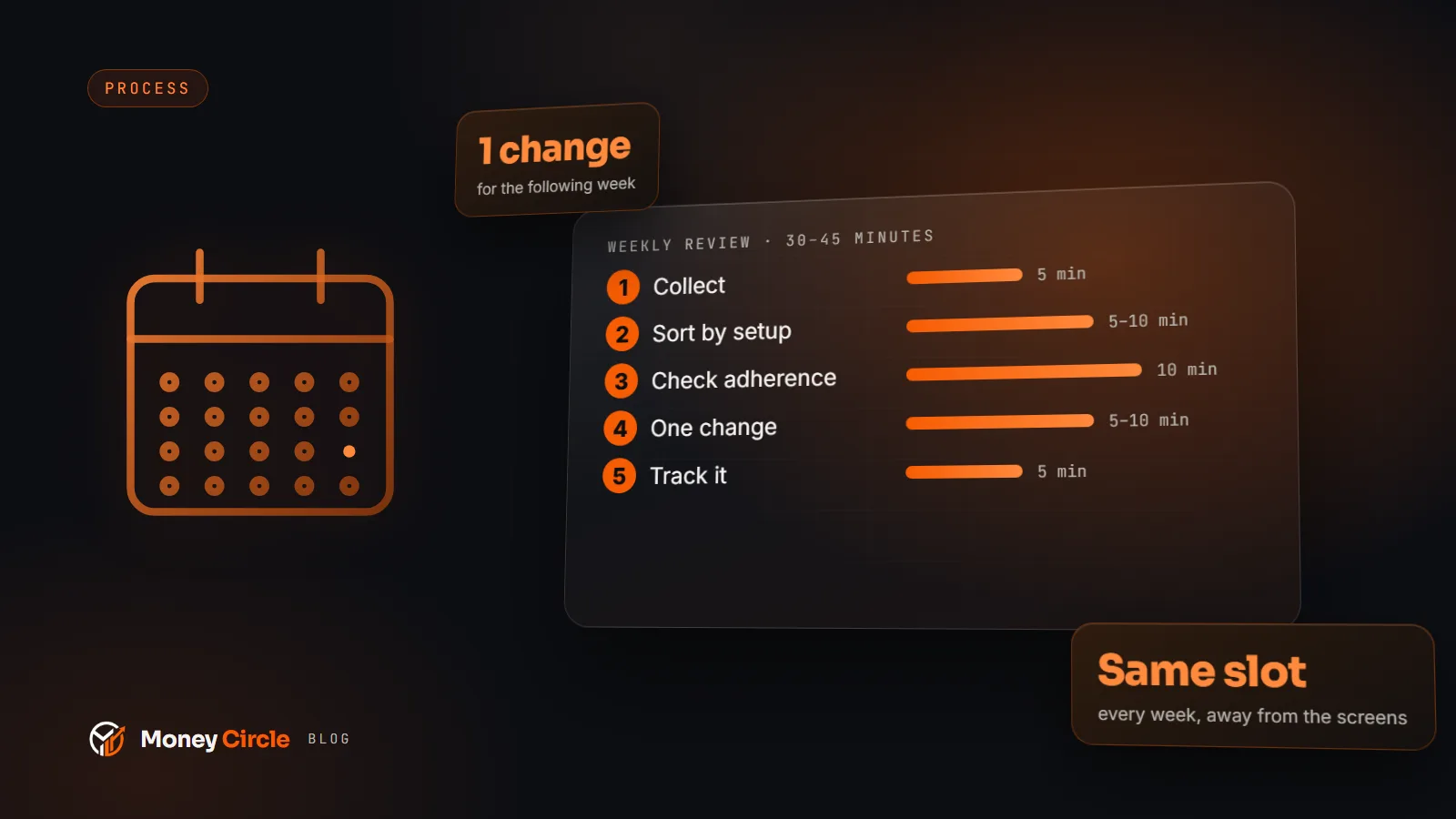
Keep a record of the analysis and the eventual result. Over time, this shows whether you are using the tool well. You may find that AI confirmation is most useful for pullbacks in strong trends, while its breakout calls need more volume confirmation. That insight is more valuable than blindly following any individual output.
A capable trading copilot should make your decisions clearer, not louder. Use it to spend less time decoding charts and more time following rules. When a setup is still unclear after the analysis, the strongest trade may be no trade at all.
Educational content, not financial advice. Trading involves risk of loss.
 Money Circle Blog
 Trader Reflect Blog