The Future of AI Trading Analysis
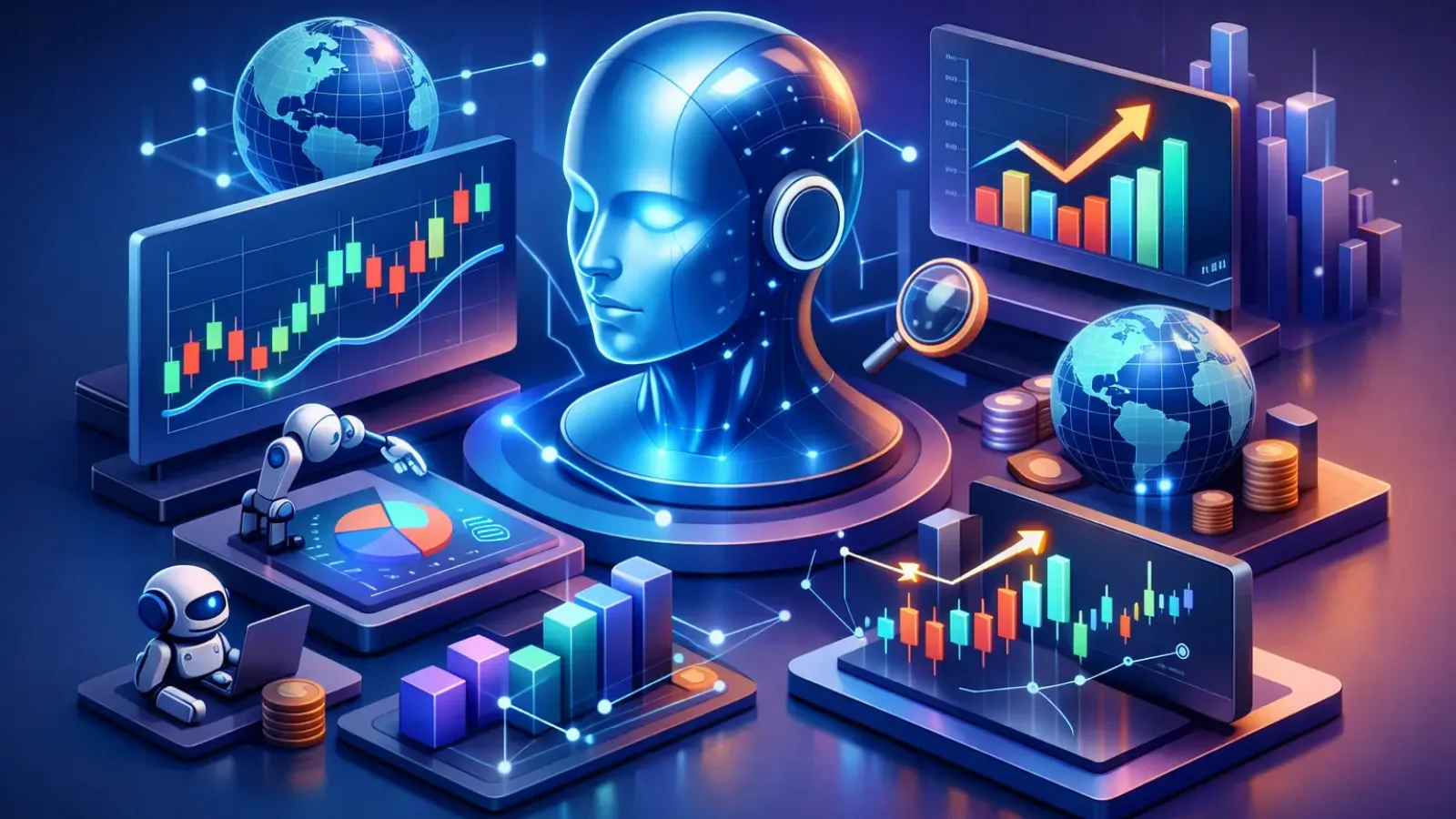
A trader reviewing 20 charts before the opening bell has one real problem: time. The future of AI trading analysis is not about replacing judgment. It is about cutting delay, reducing inconsistency, and turning raw chart data into faster, more structured trade decisions.
That matters because most retail traders do not lose only from bad ideas. They lose from hesitation, overanalysis, late entries, weak risk planning, and inconsistent chart reading. AI is starting to change that. Not by predicting every move, but by making technical analysis more repeatable and easier to act on.
What the future of AI trading analysis really looks like
A lot of people still think AI trading tools are mainly about signals. Buy here. Sell there. That is too narrow, and in many cases, not very useful on its own. The next phase is broader and more practical.
The future of AI trading analysis will center on interpretation speed, visual pattern recognition, and context. Traders will increasingly use AI to scan charts, identify trend structure, mark support and resistance, highlight possible entry and exit zones, and bring order to setups that would otherwise take too long to review manually.
This shift is especially important for active traders across stocks, forex, and crypto. Markets move quickly, and chart opportunities do not wait for perfect analysis. An AI system that can instantly read a chart and organize the key technical levels gives traders something valuable: a cleaner decision process under time pressure.
That does not mean every AI output should be followed blindly. It means traders can spend less time decoding the chart and more time deciding whether the setup fits their plan.
From prediction hype to decision support
The strongest AI tools in trading will likely be the ones that support decisions, not pretend to remove them. That distinction matters.
Prediction-only systems often create false confidence. Markets are noisy, and even strong technical setups fail. A tool that presents one-sided certainty can make traders more aggressive at the wrong time. Decision-support AI works differently. It helps identify structure, probabilities, and risk zones while leaving room for discretion.
For retail traders, this is a better model. Most do not need a black-box engine making unchecked calls. They need faster chart analysis, clearer levels, and more consistency in how they evaluate trades. That is where AI has real staying power.
In practice, that means the best platforms will not just generate outputs. They will show why a chart looks bullish, where momentum weakens, how price is reacting around a key level, and where invalidation may sit. That kind of structure improves discipline. It also reduces the habit of forcing trades from vague chart impressions.
Why chart-based AI has an edge
A major part of the future of AI trading analysis is visual. Traders do not only work with spreadsheets and news feeds. They work with candles, trendlines, consolidation zones, breakouts, failed breakouts, retests, and momentum shifts. Reading those visuals quickly is hard, especially when scanning multiple assets.
AI built for chart interpretation has a clear advantage here. Instead of requiring traders to manually map every level and pattern, it can process the image itself, detect meaningful structure, and return a usable analysis in seconds. That is a productivity gain, but it is also a quality gain. Consistent level-marking and pattern recognition help reduce emotional chart reading.
This is where platforms like ChartViews AI fit naturally. The value is not only speed. It is the ability to upload a chart and get structured technical analysis without repeating the same manual work across every setup.
For newer traders, that lowers the barrier to solid chart review. For experienced traders, it acts more like a second set of eyes. Both use cases matter, and both will grow.
Where AI trading analysis gets better from here
The next improvements will likely be less flashy and more useful. Better AI trading analysis will become more context-aware. Instead of simply labeling a trend or spotting a support zone, it will increasingly evaluate how strong that structure is, how recently it was tested, and how it aligns with current price behavior.
Multi-timeframe analysis is one area where this becomes powerful. A setup might look clean on the 15-minute chart but run directly into higher-timeframe resistance. AI that can compare those layers quickly will help traders avoid low-quality entries.
Another major improvement is personalization. Traders have different styles. A breakout trader, a scalper, and a swing trader do not want the same chart read. Future systems will adapt their analysis to the user's strategy, preferred timeframe, and risk tolerance. That makes the output far more actionable than generic trade commentary.
There is also a strong case for better feedback loops. Over time, AI tools will likely learn from which setups a trader takes, which levels they trust, and where they tend to make mistakes. That creates a more tailored decision environment. Used well, this can help traders build process consistency, not just save time.
What AI still cannot do well
There is real upside here, but there are limits. Traders should be clear-eyed about them.
AI can identify chart structure faster than most people. It can organize information cleanly. It can reduce friction in technical analysis. But it still does not remove market uncertainty. It does not know when a trader is emotionally overexposed. It does not fully understand the non-technical reasons a market can suddenly reprice.
It also depends on input quality. A messy chart, poor timeframe selection, or missing context can weaken the output. And while AI may detect patterns that look statistically useful, not every market behaves the same way all the time. A trend-following read in a choppy market can still fail.
This is why disciplined traders will get the most from AI. The tool works best when paired with risk controls, trade selection rules, and a clear plan. AI can improve execution quality. It cannot replace responsibility.
The retail trader advantage
For years, advanced trading infrastructure was more available to institutions than individuals. AI is helping close part of that gap.
Retail traders can now access analysis speed and structure that once required much more time, experience, or staffing. That does not mean retail suddenly has an easy edge. It means traders who use AI well can become more efficient, more consistent, and less reactive.
That matters because retail performance often breaks down at the workflow level. Too many charts. Too little time. Too much second-guessing. AI changes the workflow first. And when workflow improves, decision quality often follows.
A trader who can quickly identify trend direction, key levels, and possible entries across multiple markets has a practical advantage over one who is still manually drawing every scenario from scratch. Not because the machine is magic, but because speed and structure matter.
What traders should look for now
As AI trading tools become more common, quality will vary. Traders should be selective.
The most useful tools will be clear, chart-focused, and built around actionable technical outputs. They should help identify trend structure, support and resistance, and realistic trade zones. They should also be fast enough to fit an actual trading routine. If a platform adds complexity instead of reducing it, the value drops quickly.
Transparency matters too. Traders should be able to understand what the analysis is showing and compare it against their own read. Blind signal dependence is a weak long-term strategy. Assisted interpretation is stronger.
It also helps to choose tools that support discipline rather than hype. Good AI should reduce noise, not create more of it.
The future is faster, but not automatic
The future of AI trading analysis is not a world where every trade is outsourced. It is a world where chart review becomes faster, more consistent, and easier to act on. That is a meaningful shift for active traders who want sharper execution without adding hours of manual analysis.
The traders who benefit most will not be the ones looking for certainty. They will be the ones looking for better process. AI can help them identify stronger setups, avoid weak ones, and move with more confidence when the chart is clear.
That is the real opportunity ahead: not fewer decisions, but better ones made faster.
Educational content, not financial advice. Trading involves risk of loss.
 Money Circle Blog
 Trader Reflect Blog