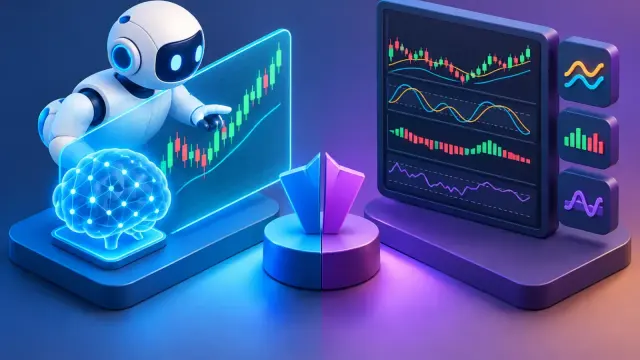
Manual Charting vs AI Workflow for Active Traders
A chart can look clean at first glance, then consume 20 minutes as you redraw levels, question the trend, check another timeframe, and second-guess the entry. Repeat that process across a watchlist, and technical analysis becomes a bottleneck. The choice between manual charting vs AI workflow is not about removing trader judgment. It is about deciding where your time creates the most value.
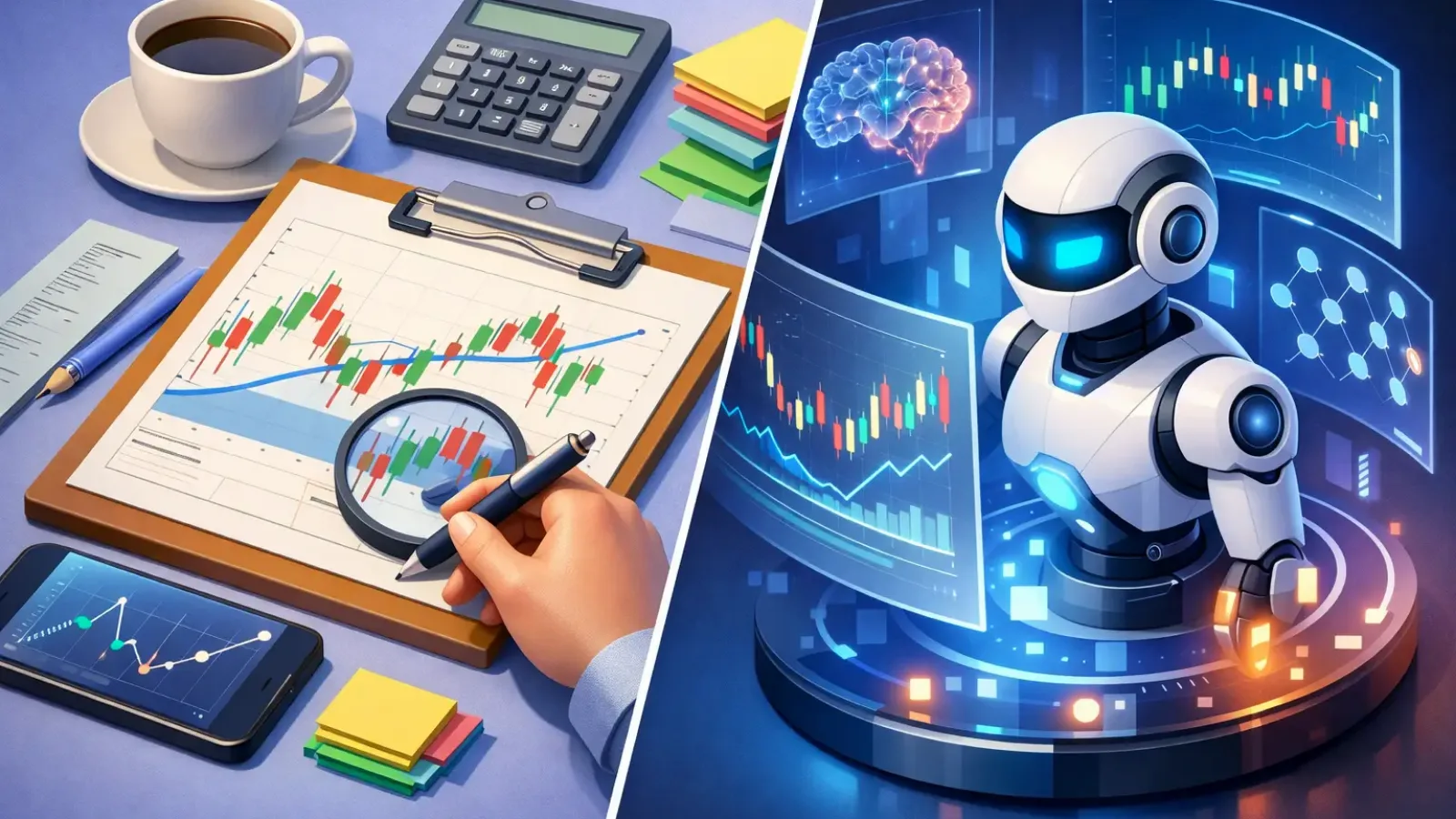
Manual charting gives you direct control over every line, indicator, and interpretation. An AI-assisted workflow can turn a chart upload into a structured review of trend, support, resistance, and potential trade areas within seconds. For active traders, the better approach depends on what you need from the chart at that moment: deep context, fast screening, objective confirmation, or all three.
What Manual Charting Does Well
Manual charting remains a core skill. Drawing levels yourself forces you to engage with price structure. You can see how a breakout developed, where liquidity may be sitting, whether volume supports the move, and how the current setup fits a larger market narrative.
That context matters most when conditions are unusual. A major earnings release, a central bank decision, a sudden crypto liquidation, or an index moving around a key weekly level can change the meaning of a pattern. A trader who understands market structure can recognize when a textbook setup is not actually tradable.
Manual work also gives you flexibility. You can apply the exact framework you trust, whether that is market structure, moving averages, Fibonacci levels, volume profile, VWAP, or a price-action model built through experience. You are not limited to a fixed output or a generic setup label.
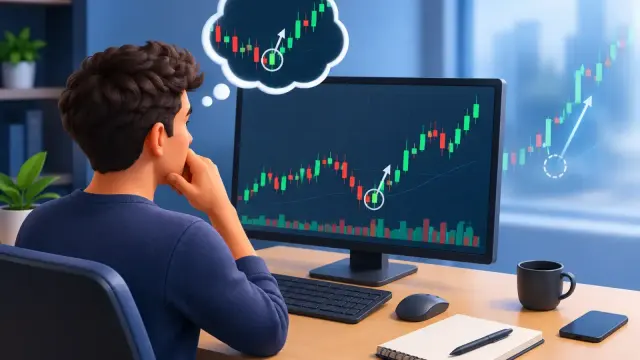
The problem is not that manual charting is ineffective. The problem is that it is difficult to perform at the same level, every time, under time pressure. After reviewing ten charts, many traders start rushing. Levels become less precise. Timeframes get skipped. Confirmation bias enters the process. The chart you want to trade can begin to look better than it is.
Where Manual Charting Slows Performance
The cost of manual analysis is rarely one chart. It is the repeated effort across a full session. A swing trader may need to review daily, four-hour, and hourly charts for dozens of symbols. A day trader may need to monitor changing intraday structure while managing open positions and watching news.
That creates several friction points. First, manual reviews are slow to scale. Second, the quality of analysis can vary with fatigue, distraction, or emotion. Third, traders often spend too much time identifying basic chart conditions and too little time defining risk, validating a trade thesis, and planning execution.
There is also a documentation problem. If your process lives only in your head and scattered chart annotations, it is hard to review later. You may remember a trade as a good setup that failed, without recognizing that you entered directly below resistance or took it against the higher-timeframe trend.
Manual charting works best when it is purposeful. It is less efficient when you are using it to do the same first-pass work repeatedly across every chart in your watchlist.
Manual Charting vs AI Workflow: The Real Difference
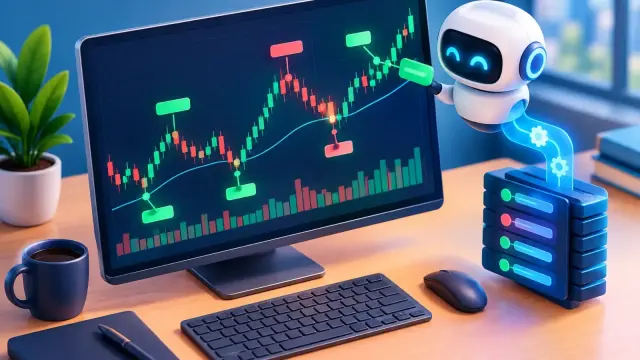
An AI workflow changes the first stage of chart analysis. Instead of beginning with a blank chart and manually finding every major level, you upload a chart and receive a structured interpretation. The output can identify trend direction, relevant support and resistance zones, key price behavior, and possible entry and exit areas.
The value is speed, but speed alone is not the goal. The larger benefit is consistency. A structured AI review applies the same analytical lens to each chart, helping you compare setups without letting the most exciting ticker receive all of your attention.
For example, imagine you are scanning six stocks before the open. With a manual-only process, you may fully annotate two charts, quickly glance at three, and miss a cleaner setup on the sixth. With AI-assisted analysis, you can establish a fast baseline across the full group. Then you can spend your manual review time on the strongest opportunities, checking catalysts, volume, broader market conditions, and trade-specific risk.
That is a more productive division of labor. The AI handles fast chart interpretation and repeatable technical structure. The trader makes the final decision based on context, strategy, position sizing, and risk tolerance.
AI is not a substitute for a trading plan
An AI chart analysis should not be treated as a command to buy or sell. Charts do not contain every relevant variable. They cannot fully account for surprise headlines, liquidity conditions, your account size, your open exposure, or whether a setup fits your rules.
Use AI insights as a disciplined input, not an automatic execution trigger. If an analysis identifies bullish momentum and a potential entry zone, verify whether the level makes sense on your preferred timeframe. Define where the trade is invalidated. Decide your maximum loss before entering. If the risk-reward relationship is weak, pass.
This is where experienced traders gain an edge from AI. They do not hand over responsibility. They reduce repetitive work so they can focus more attention on decision quality.
When an AI Workflow Has the Strongest Advantage
AI-assisted chart review is especially useful when speed and coverage matter. It can help traders who scan many symbols, move between stocks, forex, and crypto, or struggle to identify support and resistance consistently.
It is also valuable for newer traders. Learning to read charts still matters, but instant structured feedback can shorten the gap between seeing price movement and understanding what may be happening. Rather than randomly drawing lines, a trader can compare their view with a clearly organized analysis and improve their process over time.
For intermediate traders, AI can act as a confirmation layer. If your read sees an uptrend with price pulling back toward support, an independent AI interpretation may help you validate the structure or spot a nearby resistance area you did not weigh heavily enough. Confirmation does not guarantee a winning trade, but it can reduce avoidable blind spots.
ChartViews AI is designed for this high-speed review stage: upload a chart, identify trend and key levels, then make a more structured decision from there. The workflow is particularly effective when your current process is held back by slow chart scanning or inconsistent technical analysis.
Build a Hybrid Workflow That Fits Your Trading Style
The strongest approach for most active traders is not manual charting or AI alone. It is a hybrid process with clear responsibilities.
Start with AI for the first pass. Review the reported trend, support, resistance, and potential trade areas across your watchlist. This helps you eliminate charts that are choppy, extended, or lacking a clear structure.
Next, use manual charting for qualification. Check the higher timeframe, recent volume, market conditions, upcoming events, and the exact rules of your strategy. Add any levels or context that are unique to your method. This is where you decide whether a technically interesting chart is actually a tradeable setup.
Finally, create the execution plan manually. Set an entry condition, stop location, target, position size, and invalidation point. No tool can decide how much risk is appropriate for your account or whether you are already overexposed to the same market theme.
This workflow prevents two common mistakes. You avoid spending excessive time on weak charts, and you avoid treating a fast analysis as a reason to skip risk management.
Choose the Workflow That Improves Your Next Decision
If you trade a small number of positions and rely on a highly specialized discretionary method, manual charting may remain the center of your process. If you scan a large watchlist, trade around a demanding schedule, or want more consistency in identifying chart structure, AI can deliver an immediate advantage.
The question is not whether manual skills still matter. They do. The better question is whether your current process gives those skills enough room to matter. Let automation handle the repetitive first read, then bring your judgment to the decisions that determine risk and execution. A faster chart review is useful only when it helps you make the next trade with more clarity and less impulse.
Educational content, not financial advice. Trading involves risk of loss.
 Money Circle Blog
 Trader Reflect Blog