
How to Plan Trade Entries With Precision

A decent setup can still turn into a bad trade if the entry is vague. That is why learning how to plan trade entries matters so much. The goal is not to predict every move. The goal is to know exactly where you want to act, what needs to happen first, and what invalidates the idea before the market forces a rushed decision.
Many traders do the hard part backward. They spot a chart they like, feel momentum building, and then enter because the move looks like it is starting. That approach creates slippage in decision-making. You are no longer trading a plan. You are reacting to pressure. Strong entries come from structure, not speed alone.
How to plan trade entries before the market moves
A trade entry should be planned before price reaches your trigger zone. If you wait until the chart looks exciting, your risk usually gets worse while your judgment gets weaker. The market rewards preparation more than enthusiasm.
Start with the basic question: what is the setup? That sounds simple, but many entry mistakes happen because traders define setups too loosely. A breakout, a pullback, a bounce at support, or a rejection from resistance each require different conditions. If your setup is not clearly labeled, your entry criteria will stay fuzzy.
Once the setup is defined, mark the level that matters most. This is usually support, resistance, a trendline reaction, a prior high or low, or a consolidation boundary. Your entry should make sense relative to that level. If there is no meaningful chart level behind the trade, you may be entering on noise.
Then decide what kind of confirmation you need. Some traders want a candle close above resistance. Others want a retest after the breakout. Some want momentum confirmation from volume or trend continuation. None of these is universally best. The right choice depends on the market, timeframe, and how much false breakout risk you are willing to accept.
The trade-off is straightforward. Early entries can improve reward if the move runs, but they carry more uncertainty. Confirmed entries reduce guesswork, but they often come with worse price. There is no perfect answer. There is only the entry style that fits your risk tolerance and your system.
Build the entry around risk, not hope
A planned trade entry is only valid if the risk is acceptable before you enter. This is where many traders get trapped. They find a setup they like, choose the entry first, then force the stop loss somewhere inconvenient. That creates random position sizing and poor expectancy.
A better process starts with invalidation. Ask where the setup is clearly wrong. If price moves there, the original idea is no longer valid. That point should shape your stop placement. From there, you can calculate whether the entry still offers a reasonable reward relative to the risk.
For example, if a stock is approaching resistance and you plan to buy a breakout, your entry cannot be evaluated in isolation. You need to know where the failed breakout is confirmed, how far that stop is from your trigger, and whether the target justifies taking the trade. If the setup only offers a narrow upside before the next major resistance, the entry may be technically correct but strategically weak.
This is why disciplined traders reject many good-looking charts. A valid pattern is not enough. The entry has to fit the risk framework. If it does not, passing is part of the plan.
How to plan trade entries by setup type
Not every market move should be entered the same way. Breakout entries, pullback entries, and reversal entries all need different logic.
Breakout entries
Breakout trades work best when price is pressing into a clear level with enough energy to suggest continuation. The key question is whether you enter on the break itself or wait for a close above the level. Entering early gets you a better price, but false breaks are common, especially in choppy markets.
If you trade breakouts, define what qualifies as a real break. It could be a candle close beyond resistance, a range expansion, or a breakout with strong volume. If you prefer retests, decide how much pullback is acceptable. Without that rule, you risk chasing after the clean move has already happened.
Pullback entries
Pullbacks often offer cleaner risk than breakouts because they let you enter closer to support within an existing trend. But the trap is assuming every dip is a buying opportunity. A pullback needs context. Is the trend still intact? Is price pulling into a real support area or just drifting lower? Has momentum shifted too far against the trade?
A good pullback entry usually combines trend context with a reaction signal. That could be a bounce from a prior resistance turned support, a reclaim of a moving average, or a strong rejection candle at a level. The tighter your entry criteria, the less likely you are to buy weakness that keeps sliding.
Reversal entries
Reversal setups attract traders because they can offer strong reward if timed well. They also punish impatience. Trying to catch the exact bottom or top usually means stepping in before the market has actually turned.
If you trade reversals, build your entry around evidence of failure in the previous move. That might mean a double bottom, a break of structure, or a sharp rejection from a major level. Reversal entries need more confirmation than continuation setups because the burden of proof is higher.
The role of timeframe alignment
A strong entry on one timeframe can be weak when seen from a broader chart. That is why timeframe alignment matters. If you are entering on a 15-minute chart directly into daily resistance, the setup may have less room than it appears. If you are buying a one-hour pullback within a strong daily uptrend, the trade often has better context.
You do not need to overcomplicate this with too many charts. Usually, one execution timeframe and one higher timeframe are enough. The higher timeframe provides direction and key levels. The lower timeframe helps with timing. This keeps the plan clean while reducing blind spots.
For active traders, this step cuts a lot of unnecessary entries. It is often the difference between trading a chart pattern and trading the actual market structure.
Remove hesitation with pre-defined triggers
Hesitation usually comes from one of two problems. Either the setup is unclear, or the trader has not decided what action to take when price reaches the zone. Planning solves both.
Your trigger should be specific enough that there is little room for debate in real time. That could mean entering only if price closes above resistance, only if a pullback holds a prior level, or only if a reclaim happens with momentum. If your trigger depends on how confident you feel in the moment, it is not a trigger. It is a mood check.
This is where structured chart analysis can save time and improve consistency. Instead of manually reviewing every level, trend shift, and support zone from scratch, traders can use tools that surface those areas quickly and help frame the setup before execution. Platforms such as ChartViews AI can speed up that process by highlighting trend direction, support and resistance, and actionable zones from a chart upload. The edge is not automation for its own sake. The edge is getting to a disciplined decision faster.
Common entry planning mistakes
Most entry problems are not technical. They are procedural. Traders chase because they did not mark the level early. They enter too soon because they confused anticipation with confirmation. They widen stops because they planned the trade around profit first and risk second.
Another common mistake is treating every setup as equal. Some trades deserve aggressive entries because the structure is clean and momentum is strong. Others need patience because the market is messy or the level is less defined. If your entry style never changes with market conditions, you will force trades that do not fit.
There is also the issue of overconfirmation. Waiting for every signal to align can reduce false starts, but it can also leave you entering late with poor reward. Better planning is not about stacking endless filters. It is about choosing the few conditions that matter most for your setup.
A practical standard for better trade entries
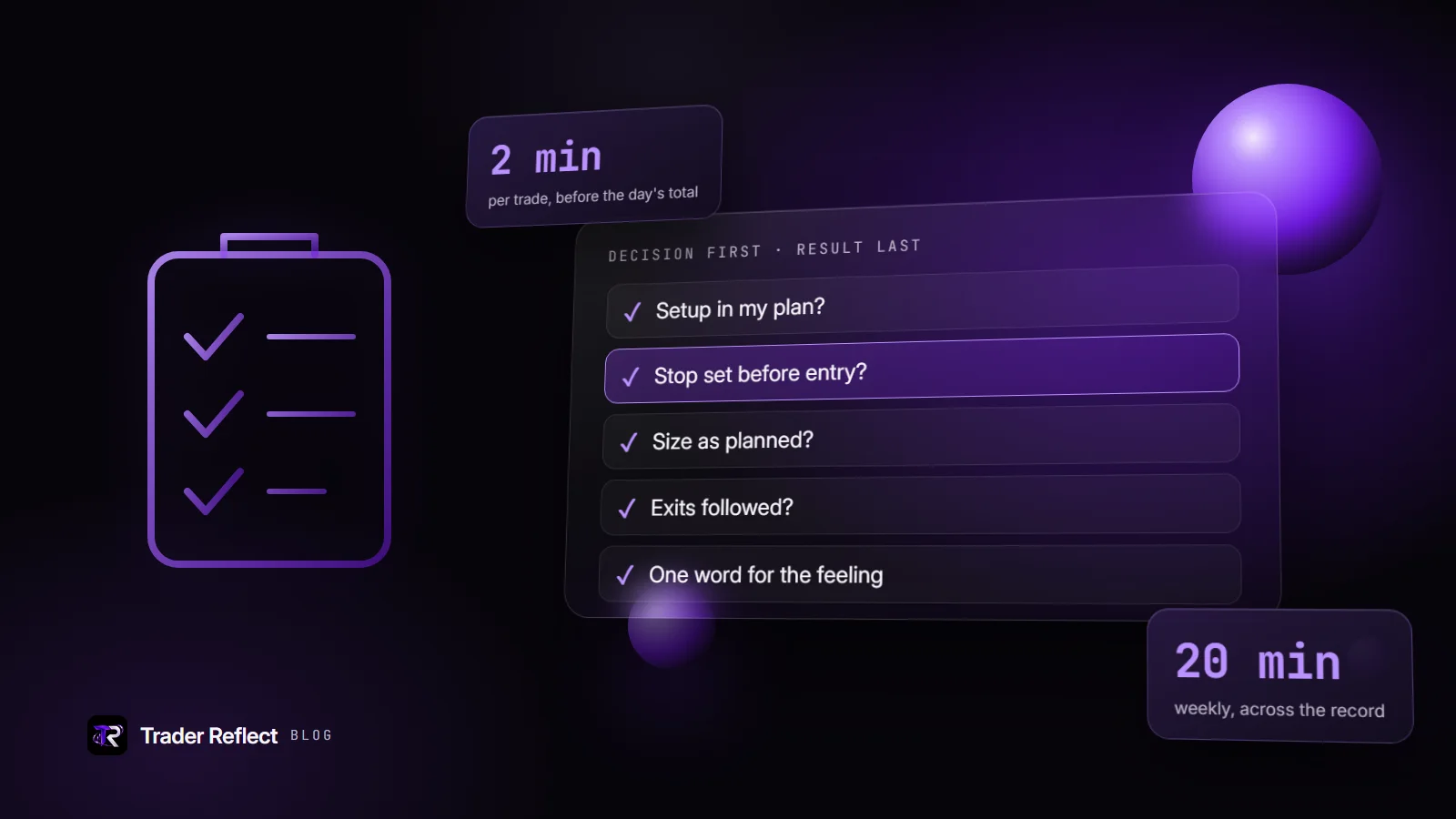
If you want a simple way to improve execution, hold every entry to five questions. What is the setup? Where is the key level? What confirms the entry? Where is invalidation? Does the reward justify the risk?
That framework keeps you focused on decisions that matter. It also exposes weak trades early. If you cannot answer one of those questions clearly, the chart probably needs more time or should be skipped.
The market does not pay for activity. It pays for well-timed risk. The more clearly you plan your trade entries, the less room there is for impulse, hesitation, and expensive second-guessing. A precise entry will not save a bad idea, but it can make a good setup tradable when the moment arrives.
Educational content, not financial advice. Trading involves risk of loss.

 Money Circle Blog
 Trader Reflect Blog