Can AI Improve Trade Timing? Yes, With Limits
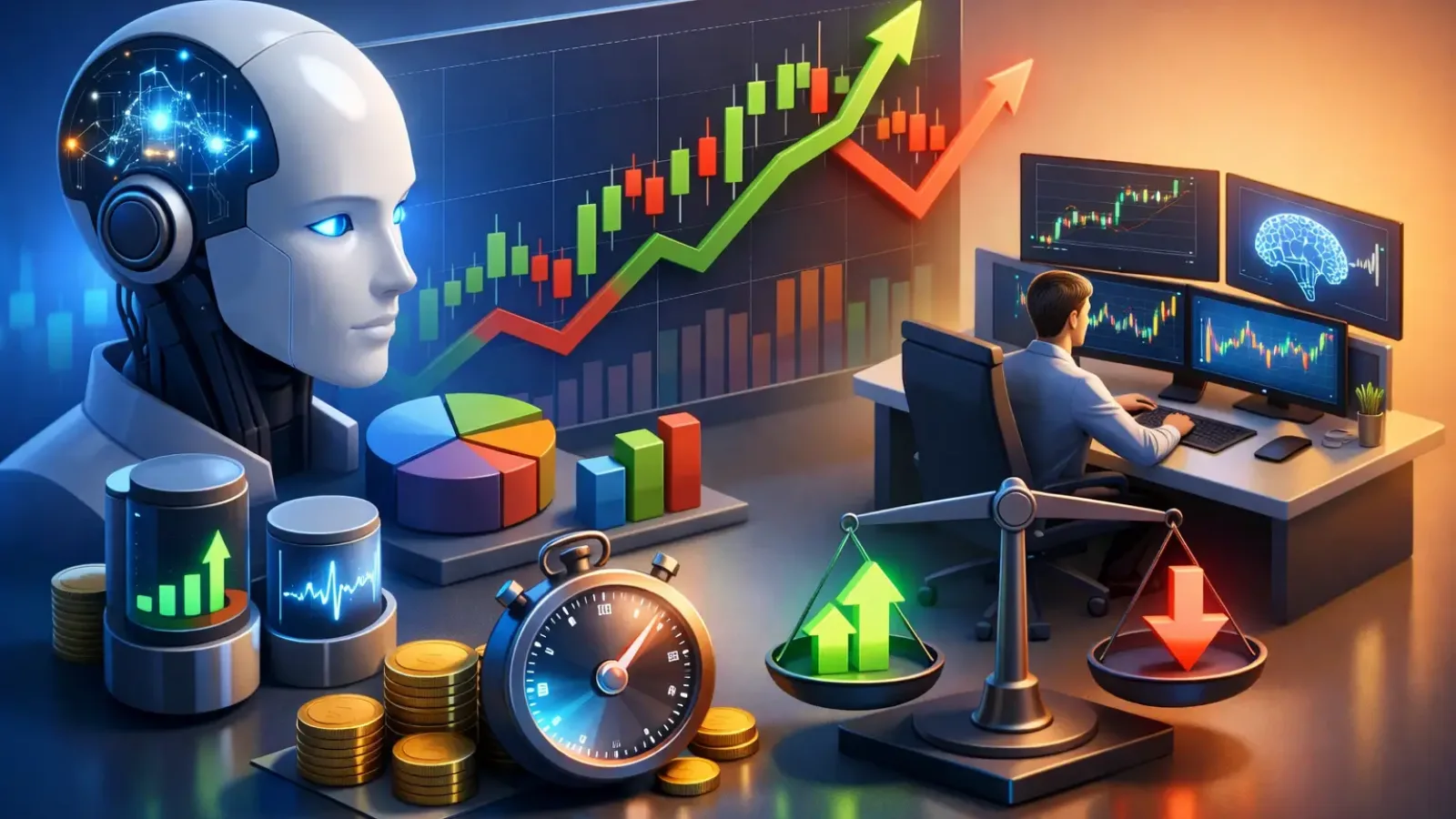
A missed entry by two candles can turn a clean setup into a forced trade. A late exit can turn a winner into frustration. That is why traders keep asking the same question: can AI improve trade timing? The short answer is yes - but not by magically predicting every market move. AI improves timing by making chart analysis faster, more consistent, and easier to act on when seconds or minutes matter.
For active traders, timing problems usually do not come from a lack of indicators. They come from hesitation, inconsistent chart reading, and the mental drag of reviewing too many setups at once. AI is useful because it reduces that drag. It helps traders see structure sooner, confirm levels faster, and make decisions with more discipline.
Can AI improve trade timing in real trading?
It can, if you define trade timing the right way. Good timing is not about buying the exact bottom or selling the exact top. It is about entering when the setup is valid, exiting when the edge weakens, and avoiding trades that never met your criteria in the first place.
AI supports that process by identifying repeatable signals across charts. It can highlight trend direction, support and resistance zones, momentum shifts, and possible entry and exit areas based on the chart in front of you. That matters because many traders are not losing money from a lack of market access. They are losing it in the gap between seeing a chart and acting on it correctly.
If AI cuts that gap, timing improves.
Where AI actually helps
The biggest advantage is speed. Manual chart review takes time, especially when you trade multiple markets or timeframes. By the time a trader checks trend structure, marks key levels, and compares possible entries, the setup may already be moving. AI shortens the review cycle.
That speed is only valuable if it comes with consistency. Traders often draw different conclusions from the same chart depending on stress, recent losses, or simple fatigue. One day a pullback looks healthy. The next day it looks weak. AI does not remove uncertainty from markets, but it can standardize the first pass of analysis so the chart is interpreted with the same logic every time.
This is where timing improves most. Not from prediction, but from cleaner execution.
Faster recognition of trend and structure
Trade timing starts with context. Entering early in a strong trend is different from entering early in a choppy range. AI can identify whether price is trending, compressing, breaking out, or testing a level that has already mattered. That gives traders a quicker read on whether patience or action is the better move.
If the market is approaching a major resistance area, timing may mean waiting instead of chasing. If price is bouncing from a clearly defined support zone with momentum building, timing may mean acting before the move becomes obvious to everyone else.
Better entry and exit discipline
Many traders know what a good setup looks like after the fact. The harder part is recognizing it in real time and following through. AI can suggest actionable entry and exit zones based on chart structure, which helps reduce emotional decision-making.
That does not mean every suggestion should be taken. It means the trader starts from a structured framework instead of a blank screen. A good framework can prevent late entries, early profit taking, and the habit of moving stops without a clear reason.
Less analysis paralysis
Trade timing gets worse when every setup feels debatable. That is common for retail traders who use too many indicators or switch between conflicting ideas. AI is valuable because it simplifies the first decision: is this chart worth my attention right now?
If the answer is no, you move on. If the answer is yes, you can focus on execution. That filter alone can improve timing because fewer low-quality setups make it into your watchlist.
What AI cannot do
This is the part traders need to hear clearly. AI does not remove market risk. It does not know the future. It does not protect you from bad position sizing, poor liquidity, or news-driven volatility that breaks every technical level on the chart.
It also cannot fully account for your strategy rules unless those rules are clearly defined and followed. If your process is inconsistent, AI may speed up analysis without fixing the real problem.
That is why the answer to can AI improve trade timing is not a blanket yes for everyone. If a trader uses AI as a shortcut to avoid thinking, results will likely stay inconsistent. If a trader uses AI as decision support inside a disciplined process, the value is much higher.
The trade-off: speed vs judgment
Faster analysis sounds great, but there is a trade-off. Speed can improve execution, yet it can also tempt traders into overtrading. When charts are reviewed quickly, more setups look tradable. Without clear filters, AI can make activity easier without making performance better.
Human judgment still matters most in three areas: market context, risk tolerance, and strategy fit. A strong-looking technical setup may still be a poor trade if it is sitting ahead of a major economic release, trading into thin liquidity, or conflicting with your broader plan.
The best use of AI is not replacing discretion. It is sharpening it.
Can AI improve trade timing for beginners and experienced traders?
Yes, but in different ways.
For beginners, AI helps reduce the learning curve. Many newer traders struggle to identify trend structure, key levels, and realistic entries. They either enter too late because they need too much confirmation or enter too early because they mistake noise for opportunity. AI makes the chart easier to read and gives them a more repeatable starting point.
For experienced traders, the value is usually efficiency. They already know what to look for. Their problem is time. When you are reviewing multiple symbols, timeframes, or markets, even small delays add up. AI can act as a fast second set of eyes, helping confirm levels and structure before execution.
That difference matters. Beginners often need guidance. Experienced traders often need compression.
How to use AI without becoming dependent on it
The strongest traders use AI as support, not authority. They compare the AI read with their own plan, then act only when both align. That creates a useful tension. If the AI flags a clean support bounce but your higher-timeframe view looks weak, you pause. If both views point to the same opportunity, confidence improves without slipping into blind trust.
A practical workflow is simple. Upload the chart, review the AI analysis, check whether the trend and levels match your own read, then decide whether the setup fits your risk plan. This keeps the final decision where it belongs - with the trader.
Platforms built around chart interpretation make this especially useful because the value is immediate. Instead of spending extra time drawing every level manually, you get a structured read on trend, support, resistance, and potential entry or exit points in seconds. For active traders, that time savings can directly affect execution quality.
The real benchmark: better decisions under pressure
Trade timing is often discussed like a technical puzzle, but in practice it is a performance problem. Pressure changes behavior. Traders hesitate after losses, chase after missed moves, and second-guess valid setups when markets get noisy. AI can help because it brings structure into moments where emotion usually takes over.
That is the real benchmark. Not whether AI catches every move, but whether it helps you make better decisions under pressure.
If your chart review becomes faster, your levels become clearer, and your entries become more disciplined, timing improves. If AI also helps you avoid weak setups and stick to your exits, the effect is even stronger. That is why tools like ChartViews AI are appealing to active traders. The edge is not magic. The edge is reducing friction between chart data and action.
Markets will always be uncertain. Entries will never be perfect. But when analysis becomes faster, more consistent, and easier to trust, you give yourself a better chance to act on the right setup at the right time. That is where AI earns its place.
Educational content, not financial advice. Trading involves risk of loss.
 Money Circle Blog
 Trader Reflect Blog