Chart Interpretation Versus Signal Service
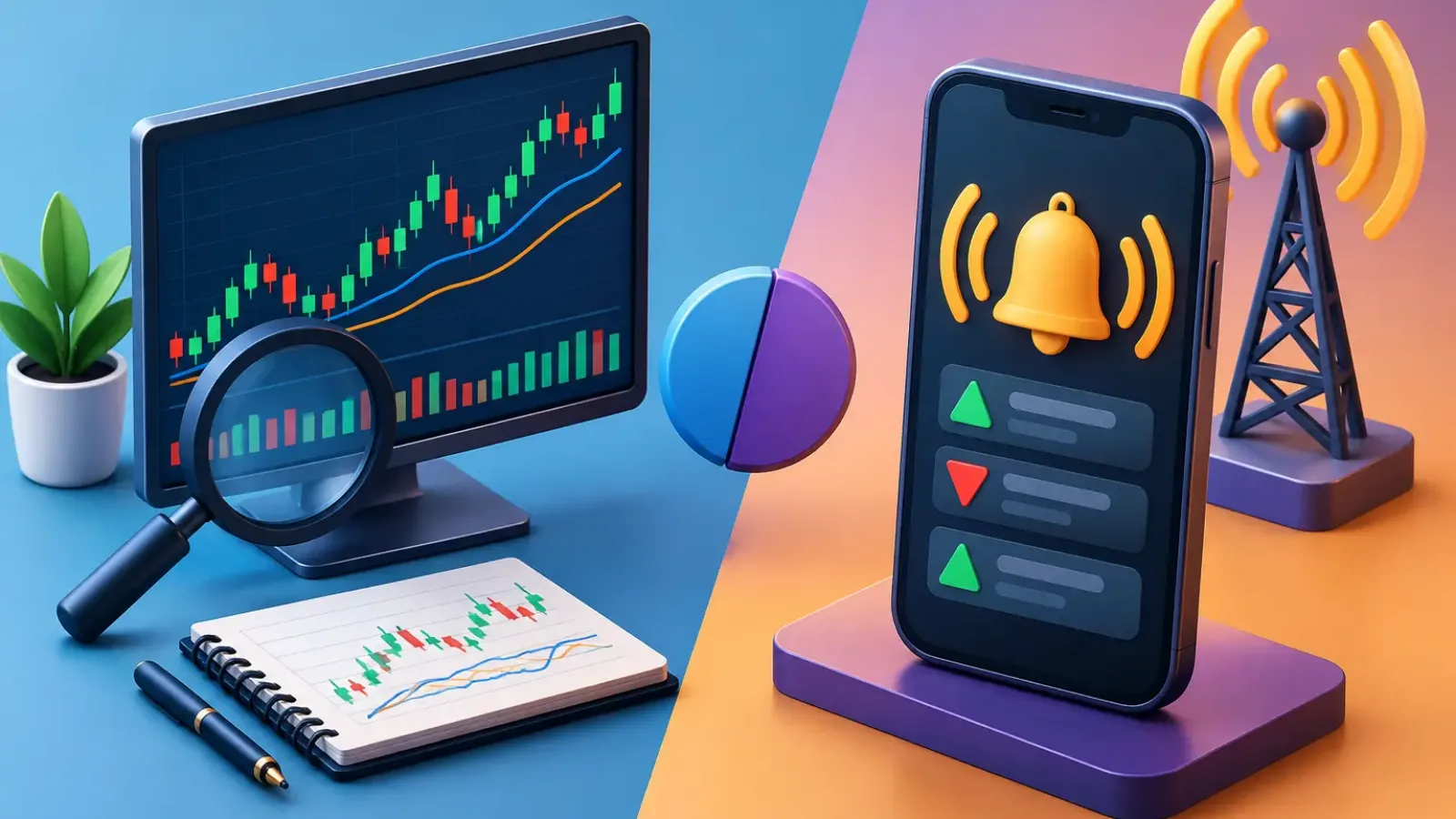
A trade alert can feel decisive: buy here, stop there, target above. But chart interpretation versus signal service is not simply a choice between doing more work and saving time. It is a choice about who owns the decision when price moves fast, the setup changes, or the alert is wrong.
For active traders, the strongest process usually is not blind chart reading or blind signal following. It is fast, structured analysis that gives you context before you commit capital. You need to know what the market is doing, where the invalidation level sits, and whether a suggested entry still makes sense at the moment you execute.
Chart Interpretation Versus Signal Service: The Core Difference
Chart interpretation means reading price action, trend structure, momentum, volume, support, resistance, and risk levels to form your own trade thesis. You may use indicators and scanners, but you are deciding what matters and how to act on it. The advantage is control. The cost is time, skill, and the risk of inconsistent judgment.
A signal service provides a trade idea generated by a person, team, algorithm, or automated system. Signals may include an asset, direction, entry zone, stop-loss level, and profit targets. The advantage is speed. The cost is dependence on someone else’s methodology, timing, and risk tolerance.
Neither approach guarantees returns. A high-quality signal can fail because the market changes after it is sent. A well-read chart can fail because every setup is probabilistic. The practical question is whether your workflow helps you make repeatable, risk-defined decisions rather than emotional reactions.
What You Gain and Give Up With Manual Chart Reading
Reading charts builds market awareness. You begin to recognize when a trend is healthy, when price is compressing under resistance, and when a breakout lacks follow-through. That context matters because the same pattern can mean different things on different timeframes or in different market conditions.
For example, a bullish breakout above a range has a different quality when the broader trend is rising, volume expands, and the next resistance level leaves room for a target. If price is pushing into a major daily resistance level after an extended move, the same breakout can be a poor risk-reward trade. A raw alert may not communicate that nuance clearly enough.
The downside is that manual analysis can become slow and subjective. Traders often draw too many levels, switch timeframes until they find confirmation, or confuse a preferred direction with actual evidence. If you review dozens of stocks, forex pairs, or crypto charts each day, the time cost compounds quickly.
Manual interpretation also has a learning curve. Beginners may see support and resistance differently from experienced traders. Even experienced traders can make inconsistent calls when tired, rushed, or already holding a position. The goal is not to eliminate judgment. It is to make judgment more structured.
What Signal Services Do Well
A signal service can reduce the search burden. Instead of scanning an entire market, you receive a smaller set of possible setups. This can be valuable for traders with limited time or those who are still learning how to identify clean market structure.
A good service may also impose discipline. Clear entries, stops, and targets can prevent the common mistake of entering too late or holding a losing trade without a defined exit. When the provider has a documented approach and transparent performance standards, signals can become a useful source of ideas and comparison.
Signals are most useful when they fit your trading plan. A swing trader should not automatically take intraday alerts. A trader with a 1% risk limit should not copy a setup that requires a wider stop than their position sizing allows. The alert is only the starting point. Your account size, timeframe, instrument, and risk parameters still determine whether the trade belongs in your process.
The Hidden Risk of Following Alerts Blindly
The greatest weakness of a signal service is not that signals lose. All strategies experience losing trades. The greater risk is losing without understanding why the trade was taken, where the thesis failed, or when market conditions no longer support the approach.
Timing is another issue. A provider may enter before an alert reaches you. In fast-moving crypto, forex, and small-cap stocks, a few minutes can change the entry quality dramatically. Chasing a signal after price has already moved can turn an acceptable risk-reward setup into a poor one.
There is also a psychological trap. When traders outsource every decision, they may ignore their own risk limits because the alert came from an authority figure. A stop-loss gets widened. A position gets doubled down. A missed target becomes a reason to hold longer. The service did not create those decisions, but blind reliance made them easier.
Before acting on any alert, check four things: current price versus the stated entry zone, the nearest support and resistance levels, the distance to invalidation, and the potential reward relative to your risk. Those checks take minutes, and they can prevent an impulse trade.
A Better Model: Signals for Ideas, Charts for Confirmation
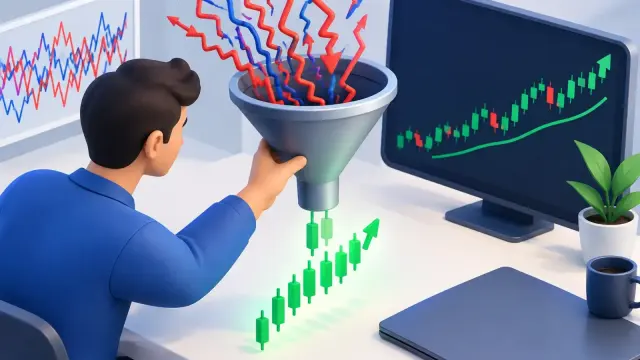
For many retail traders, the most effective model is hybrid. Use alerts, scanners, news, or watchlists to surface opportunities. Then use chart interpretation to validate the trade before execution. This preserves speed without giving up context.
Start with the higher timeframe. Is the market trending, ranging, or breaking down? Next, identify the levels that matter: prior swing highs and lows, range boundaries, major support and resistance, and any nearby areas where price has repeatedly reacted. Then move to your execution timeframe and decide whether the entry is timely.
Your final trade plan should be simple. Define the entry trigger, the stop level, the target or management rule, and the amount you are willing to lose if the setup fails. If you cannot explain those four elements clearly, the signal is not ready to trade.
This approach also improves your learning. Over time, you can compare which alerts worked, which failed, and what the charts looked like at entry. You may discover that you perform best with pullbacks in established trends, range breakouts with volume, or reversals only at major levels. That is how a collection of alerts becomes a personal trading system.
Use AI to Make Chart Review Faster, Not Mindless
The real bottleneck for many traders is not a lack of trade ideas. It is the time required to review them consistently. AI-powered chart analysis can help by turning a chart upload into a structured first read: trend direction, support and resistance zones, possible entry areas, exits, and invalidation levels.
ChartViews AI is designed for that workflow. Instead of staring at a chart and wondering where to begin, you can get instant AI-powered analysis that organizes the technical picture. The output should support your decision-making, not replace it. You still choose whether the setup matches your timeframe, risk tolerance, and market view.
That distinction matters. A tool that accelerates analysis can reduce missed details and analysis paralysis. It cannot remove uncertainty from markets. Treat AI insight as a disciplined second set of eyes, especially when reviewing multiple charts or checking an alert before entering.
Choose Based on Your Current Trading Stage
If you are new to trading, signals can expose you to setup structures and risk management concepts. But use them as study material. Save the chart, mark the levels, and review what happened after the trade. That habit develops pattern recognition faster than copying entries without context.
If you are an intermediate trader, focus on consistency. You likely know the basics but may struggle to analyze every chart the same way under pressure. A repeatable chart-review framework and AI-assisted analysis can make your execution more disciplined.
If you are experienced and short on time, the value is efficiency. You do not need another source of noise. You need a faster way to filter charts, confirm levels, and reserve your attention for the decisions that require judgment.
The best trading process makes every entry understandable before it is actionable. Let signals bring opportunities to your attention, let chart analysis test the idea, and let your risk rules make the final call.
Educational content, not financial advice. Trading involves risk of loss.
 Money Circle Blog
 Trader Reflect Blog