AI Powered Trading Analysis That Saves Time
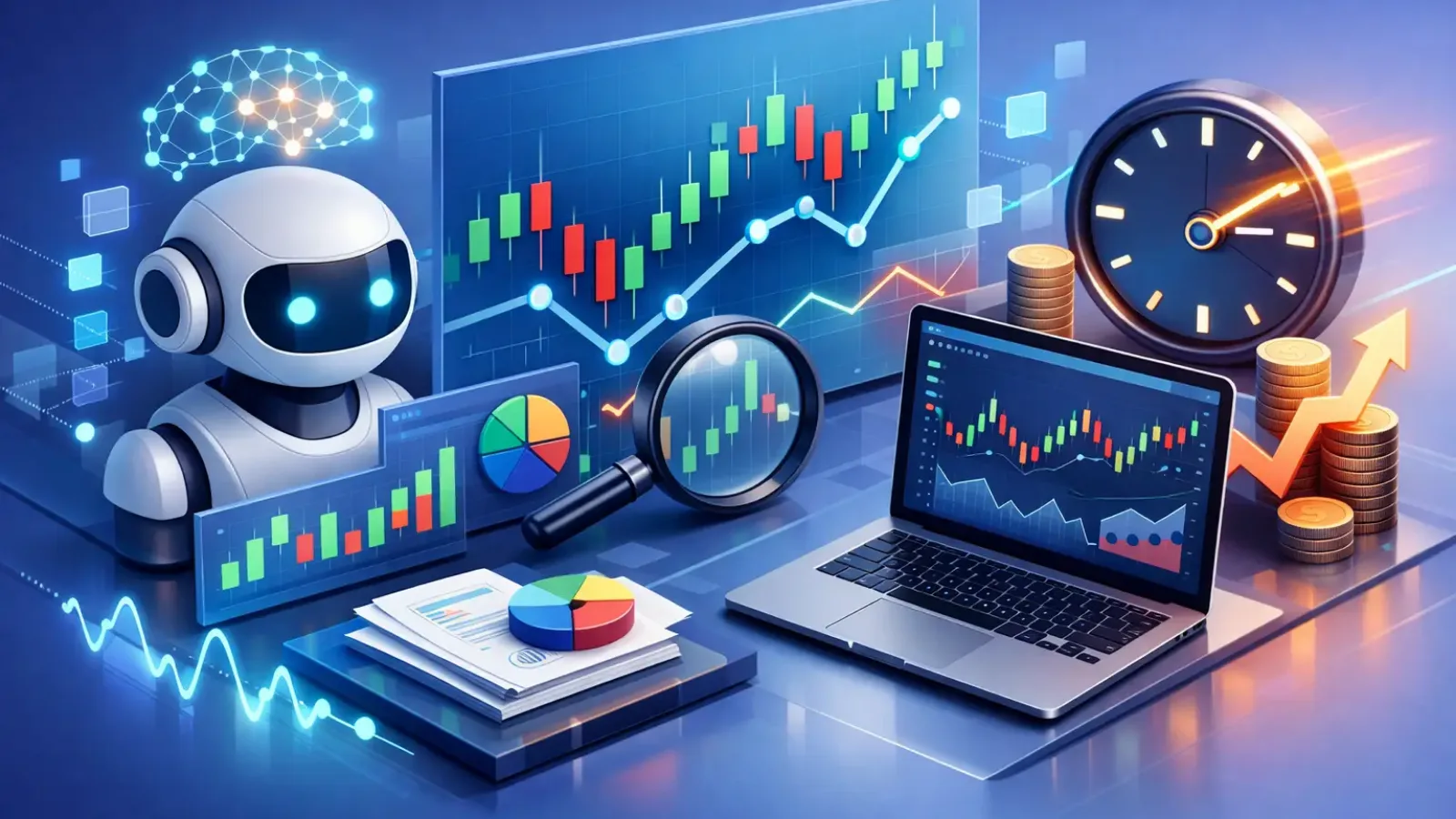
A chart looks obvious after the move. Before the move, it is a mess of competing signals, second guesses, and wasted time. That is exactly where ai powered trading analysis earns its place. For active traders, the value is not hype. It is speed, structure, and a more disciplined way to read setups before the market moves on.
Most retail traders do not struggle because they lack access to charts. They struggle because chart reading is inconsistent under pressure. One session, support is clear. The next, every wick starts to look meaningful. A strong process matters more than another indicator, and that is why AI is becoming part of the trading workflow.
What ai powered trading analysis actually does
At its best, ai powered trading analysis takes a chart and turns it into a clearer decision framework. Instead of leaving you to manually scan every swing high, trend break, and reaction zone, it identifies the structure that matters first. That usually includes trend direction, support and resistance levels, possible entry zones, and areas where risk becomes less attractive.
The practical advantage is straightforward. You spend less time trying to interpret the chart from scratch and more time deciding whether the setup fits your plan. For traders watching multiple markets, that time difference matters. A good setup can disappear while you are still debating whether the prior level really counts.
This is especially useful for traders who know the basics of technical analysis but do not always apply them consistently. AI can create a repeatable first pass. That does not replace judgment. It improves it by giving you a structured starting point.
Why speed matters more than most traders admit
A lot of trading mistakes are not caused by bad ideas. They come from slow or uneven execution. By the time some traders finish marking up a chart, the clean entry is gone and they are left chasing price or forcing a late trade.
Fast analysis changes that. When a platform can review a chart in seconds and highlight trend context, key zones, and possible trade logic, the trader gets to the real question faster: is this setup worth taking right now?
That speed also reduces mental drag. Chart review becomes lighter when you are not rebuilding the same analysis process over and over. You can move through more setups, compare opportunities, and keep your attention on quality instead of volume.
For experienced traders, the value is often confirmation and efficiency. For newer traders, it is clarity. Both groups benefit from reducing hesitation.
Where AI helps most in chart-based trading
Not every part of trading should be automated, and not every decision should be outsourced. But there are specific areas where AI has a clear advantage.
The first is visual interpretation. Traders work from charts because market structure is easier to act on when it is visible. An AI system built for chart analysis can process that visual input quickly and consistently. It can flag obvious trend behavior, reaction levels, and technical areas that a tired or rushed trader might miss.
The second is structure. Many traders do not need more information. They need cleaner organization. A chart with ten indicators and no clear plan is still a bad chart. AI can simplify the view by focusing attention on the elements that actually shape a trade.
The third is decision support. Support and resistance, entry ideas, and exit logic are useful because they turn analysis into action. That is where product-focused tools stand out. They are not trying to impress you with complexity. They are trying to help you make a faster, more disciplined call.
AI powered trading analysis is not a shortcut to guaranteed profits
This matters because the wrong expectation ruins the right tool. AI does not remove uncertainty from the market. It does not know the future, and it cannot make risk disappear. A strong setup can still fail. A clean breakout can still reverse. News can still invalidate the chart.
What AI can do is reduce avoidable mistakes. It can help traders stop overlooking levels, misreading trend context, or entering trades without a clear map. That is a real edge, but it is different from prediction.
The best traders use AI as a performance layer, not a promise. They still apply risk management. They still check whether the setup fits the broader market environment. They still understand that no analysis tool replaces discipline.
That trade-off is healthy. If you expect certainty, you will misuse the tool. If you expect better structure, you will probably use it well.
What to look for in an AI trading analysis tool
The market is full of vague AI claims, so the standard should be simple. The tool should save time, improve clarity, and produce analysis you can actually use.
Start with chart ingestion. If the workflow is clunky, adoption falls apart fast. Traders need to upload a chart and get useful output without friction. Speed is part of the product, not just a feature.
Next is the quality of the output. Generic commentary is not enough. The analysis should identify trend direction, support and resistance, and potential trade levels in a way that reflects actual chart structure. If the result reads like filler, it will not help under live market conditions.
Then look at whether the tool supports disciplined trading behavior. Good analysis does not just point at opportunity. It helps define invalidation and timing. That is what makes it usable.
A platform like ChartViews AI fits this approach because it focuses on practical chart interpretation rather than abstract AI claims. The value is immediate. Upload a chart, get structured technical insight, and move to decision-making faster.
How traders can use AI without becoming dependent on it
The strongest workflow is simple. Let AI handle the first layer of analysis, then apply your own filters. That might include checking higher time frame context, confirming risk to reward, or deciding whether the setup matches your rules for volatility and timing.
This approach keeps the trader in control. AI speeds up chart review, but the final trade still has to pass your standard. That is important because your strategy, risk tolerance, and market focus all affect how a setup should be traded.
A crypto day trader and a swing trader in large-cap stocks may look at the same chart differently. The support zone might matter to both, but the execution plan will not be the same. AI can identify the structure. The trader still decides how to use it.
That balance is the real goal. Faster analysis, stronger consistency, and less wasted motion without losing accountability.
The biggest benefit is consistency
Most traders underestimate how much inconsistency damages performance. It shows up in small ways. You rush one chart and overanalyze the next. You respect support in one trade and ignore it in another. You take a breakout one day and doubt the same pattern the next day.
Consistency is what turns technical analysis from opinion into process. AI helps by creating a stable review framework. The chart gets analyzed the same way every time, which makes it easier for the trader to compare setups objectively.
That does not make every trade better. It makes your process cleaner. Over time, that matters more. Cleaner process leads to better filtering, fewer impulsive entries, and more confidence when a valid setup appears.
For traders trying to improve, that is often the missing piece. They do not need more market noise. They need a better routine.
Why this shift is likely to stick
AI in trading will keep expanding because it solves a real operational problem. Markets move fast, traders monitor too many charts, and manual analysis does not scale well. Tools that reduce review time while keeping technical insight usable are solving something practical.
That is why ai powered trading analysis is gaining traction with both newer and more experienced traders. It lowers the barrier to chart interpretation without removing the need for skill. It supports faster action without forcing blind automation. Most of all, it turns chart review into a more repeatable process.
If your current workflow feels slow, inconsistent, or mentally heavy, that is the signal to tighten the process. Better analysis does not always start with more effort. Sometimes it starts with getting clear, actionable structure the moment the chart hits your screen.
The market will stay uncertain. Your analysis process does not have to.
Educational content, not financial advice. Trading involves risk of loss.
 Money Circle Blog
 Trader Reflect Blog